
Personal Stories of Individuals Living with Kennedy's Disease (SBMA)

Each of the following individuals live with Spinal Bulbar muscular Atrophy (Kennedy's Disease). They have been kind enough to share their personal stories for others so that they can understand the disease on a more personal level. We thank these individuals for their information.
Newest Stories
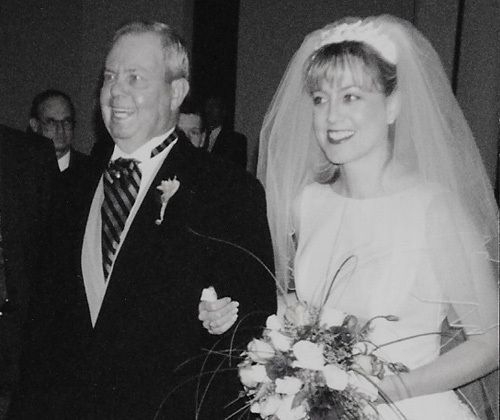
John's story (Australia)
Author: Ann Dougall – Kennedy’s Disease carrier
A Note from the Author
I am a Kennedy’s Disease (SBMA) carrier sharing my father' s personal journey.
My father's Story
The following story took place in Australia - Queensland where my family lives, as well as Victoria, where I had moved in the early 1990s.
My father fell ill in the early 1980s, around the time he turned 50, with general muscle weakness, frequent falls, and other worrying changes. At the time, the medical community was at a complete loss. This was to be the start of a decade-long parade of baffled doctors and non-answers.
My father led a rather active life before his symptoms and weakness started. In addition to his full-time job, he had become a greyhound trainer. It had been a dream of his to share this with his own father, but that was never to be because my grandfather had passed away by the time my dad got his first greyhound. My dad loved his dogs and would walk them several miles every day, morning and night. He was always doing something with them, taking them to trials or races. Being completely honest, as a teenager, I resented the dogs because I felt they always came first and stopped us from doing other things — yep, pure jealousy… As the disease progressed and robbed him of physical strength, those walks stopped, and race days became a thing of the past. He loved having his dogs, and watching his dream slowly be taken away from him was heartbreaking.
Just before my father became ill, his older brother shared that he’d been experiencing issues with his own muscle weakness. In those early years, my uncle continually assured my father that his weakness was completely different from what my dad was going through. My uncle’s medical team had confidently explained away his symptoms as nothing more than “muscle fatigue” from his past career as a jockey. Because the doctors treated it as an old athletic injury rather than a genetic clue, the connection between the two brothers was completely missed.
When my father sought answers, doctors threw around various placeholder conditions sitting under the broad MND umbrella — including Kugelberg-Welander syndrome (it wasn’t until years later we discovered this was also called juvenile SMA Type 3) and Adult-Onset Spinal Muscular Atrophy (SMA4). At one point, they even casually mentioned X-Linked Spinal Bulbar Neuropathy (known as Kennedy’s/SBMA today). These conditions were floated because his physical symptoms matched their textbook descriptions, but nothing was ever officially confirmed. It was an endless back-and-forth with no certainty. We were at a complete loss — what were we supposed to believe? Without access to medical resources to undertake our own independent research back then, we had no way to question what we were being told. We were entirely at their mercy — and front and centre, my father was their guinea pig.
His medical team resorted to guessing and incorrect assumptions. My father endured countless tests — some of them deeply unpleasant and painful — including muscle biopsies and electrical nerve tests (EMGs) in a desperate bid to find the truth behind whatever was sitting under that broad MND banner.
At one point, his doctors asked if I was willing to undergo testing. No worries… absolutely… let’s do this! I recall having a physical exam, blood tests, and an EMG — walking out looking like a bit of a pin cushion, only to be told, ever so confidently, that whatever my father had was definitely not hereditary. Fail for overall results there, doc!
A Decade of Gaslighting & Disbelief (spoiler alert: a certain profession doesn’t come out of this one looking great…)
I suppose this is as good a place as any to bring up a constant undercurrent during those years: depression. My father suffered terribly with his mental health throughout this ordeal. There is an entire psychological and psychiatric side to this journey that could fill hours of reading, but as we Aussies say — (shakes head and chortles) — “Yeah… nah,” we’re not going down that entire rabbit hole today! I will say this, though: as researchers would later reveal, there was a direct biological link between the two. It wasn’t just the psychological weight of being dismissed; it was the profound hormonal and androgen shifts inherent to Kennedy’s Disease itself.
Back in the 1980s, there was a distinct sense of apathy from the medical profession. Whether that stemmed from genuine uncertainty, discomfort at not having answers, or simply the medical culture of the time, I cannot say. I believe many of the professionals involved in my father’s care were simply overwhelmed by a condition they didn’t understand and lacked the tools to diagnose. Unfortunately, that medical uncertainty took a devastating toll. The chronic depression that followed served to zap what little physical muscle strength he had left. The care often felt dismissive, reduced to a cycle of “try this medication” regardless of the side effects. My father was left feeling unheard, unsupported, and increasingly isolated.
I’m not here to play the blame game over their inability to recognise a rare genetic disease that was poorly understood in the 1980s. Even today, Kennedy’s Disease remains under-recognised. Only recently, I mentioned to a British GP that I was an SBMA carrier and was met with the exact same reaction from decades ago: a blank look, a shrug, a shake of the head, and an admission that he had no idea what I was talking about. At least he was honest!
One memory, however, will stay with me for the rest of my life — something I never dared share with my father. In sheer desperation to get him help, I went to see our GP (QLD) when I was in my mid-20s. Instead of offering support, he looked at me and bluntly told me I needed to face the fact that my father was going to die a horrible death. There was no definitive diagnosis, let alone certainty about how his condition would progress, yet that GP felt comfortable making a statement like that to a young woman desperately searching for hope for her dad. That is something you never forget.
What was so desperately missing was an honest acknowledgement from his medical team of their own limits — and the limits of medical science at the time. Doctors aren’t known for admitting when they don’t know something, but how refreshing it would have been if someone had simply said: “I can’t give you a definitive diagnosis right now because I don’t know. But I’m going to stay with you, and together we’ll keep looking.” My father would have welcomed that rare moment of clinical humility with open arms.
The Breakthrough: Monash University & The MND Society (hallelujah, we’re getting closer all the time…)
Ironically, it was only when my father’s mental health reached a breaking point that doors finally began to open (and not in the way you might think). In the early 1990s, he suffered a severe nervous collapse and was hospitalised for several months — the first of several such admissions. It was heartbreaking to see a man who had once been so active crushed not just by physical weakness, but by the systemic failures of a medical system that couldn’t give him an answer.
By this time, fate had put a critical piece of the puzzle in place. In 1990, I moved from Brisbane to Melbourne to work at Monash University — no, not in medicine, but suddenly I had access to their libraries. Big, beautiful university libraries filled with comprehensive medical texts.
With my father in hospital, I asked my mother to come to Melbourne for some much-needed respite. My offer came with one strict condition: she had to promise to visit the Motor Neurone Disease Society of Victoria. In the early 1990s, the Queensland society was still in its infancy, whereas the Victorian branch was fully established and running like a well-oiled machine.
Together, we hit the Monash libraries to research every placeholder diagnosis we’d been handed over the years. Remember university libraries back then? Just clunky computer terminals with green text where you typed search terms into a basic catalogue screen — web browsers were still years away. But those shelves held heavy medical volumes the public rarely got to see. You little beauty!
We pulled down the texts and were stunned to read that the onset of Kugelberg-Welander syndrome was early childhood. Suggesting a juvenile disease for a man whose symptoms began in his 50s was medically absurd. You’ve gotta be bloody kidding me!
Thank goodness my mother agreed to go to MND Victoria. The moment she walked through those doors, everything changed. We will never forget Brenda Ryan from the Society and everything she did for our family. For the first time in years, someone listened. As my mother detailed my father’s symptoms, Brenda gently explained that there were other conditions that could mimic ALS — we’d never been told that before. I’ve no memory of ALS itself ever being discussed by our doctors as a potential diagnosis, but after what that GP had shared with me years prior, I suspected it may have been looming in the background of the medical profession’s minds.
Coincidentally, not long after this, my own Melbourne GP shared the exact same fact with me! Having never heard it before, to hear it twice in quick succession was unbelievable.
After sharing more about my father and his symptoms with Brenda at the society, Brenda pointed my mother towards the Kennedy’s research team at Melbourne University, as she thought there may be some interest from this team in talking with my family. Voilà, it was like a genie coming out of a bottle, and everything just fell into place. Between late 1991 and early 1992, the research team arranged genetic testing for my father, my uncle, and me. Being relentless finally paid dividends: it put an end to the dismissive attitudes because we obtained a 100% definitive diagnosis that no one could ever dispute. Both my father and his older brother had Kennedy’s Disease (SBMA).
And as a bonus prize? Testing confirmed me as an official Kennedy’s Disease carrier which was already pretty much been a given due to the X Chromosome I inherited from my father. So, after all the “no worries, let’s do this” enthusiasm and walking out looking like a pin cushion, safe to say that confident “definitely not hereditary” call from years earlier was just a bit off (you think?!). Turns out stubbornness runs in our genes, too — and being relentless had finally paid off.
Shortly afterwards, my father attended a follow-up appointment with his then-treating neurologist — a rather pompous character who snorted as he read the researcher’s report:
“How did this researcher get involved? Grumble, grumble…”
He then instructed my father to remove his shirt. For the first time in almost a decade, the neurologist actually looked, spotting the presence of gynaecomastia (enlarged breast tissue). I’m told his jaw nearly hit the floor. He shook his head and uttered five words that neatly summed up nearly ten years of missed clues:
“I never thought to look!”
Of course, it was a bittersweet victory. A diagnosis wasn’t a cure; there was no magic treatment available, and his day-to-day physical struggles didn’t vanish overnight because we had a definitive diagnosis. But having that definitive truth gave us something just as vital: peace. It lifted the heavy cloud of doubt, restored my father’s dignity, and proved to everyone that his struggle was real. In a journey with so little certainty, that quiet clarity meant the world to us.
As I reflect now, more than three decades later, I realise that my father needed more than an eventual label. He needed to know that he was being heard, taken seriously, and that someone was prepared to walk alongside him. For people living with rare diseases, that partnership and human empathy are every bit as important as the clinical diagnosis itself.
The Long Road & The Final Insult (life really loved kicking us when we were down…)
My father passed away in 2010 at 78 years of age, having lived with SBMA for approximately 28 years. By then, the disease had taken the strength from his arms and legs entirely; he was wheelchair-bound and relied on us for total care. My mother did an exceptional job as his full-time carer, alongside the Anglicare team who came in daily to assist with showering and bed/chair transfers. Between them, they provided complete, compassionate care.
As the disease slowly progressed over the years, his voice and speech altered dramatically. He could no longer eat normal food without experiencing terrifying choking episodes. It is a grim reality to reflect on, but I had to become an expert in the Heimlich manoeuvre just to keep my father safe during meals.
While SBMA progresses slowly over decades, the profound weakness it inflicts on throat and chest muscles makes respiratory infections exceptionally dangerous. My father ultimately passed away from community-acquired pneumonia.
You’d think life might have cut him — and my mother — a break after everything they’d endured. But no. My father passed away on 28 July 2010 — just one month short of my parents’ 50th Golden Wedding Anniversary on 27 August.
We had huge plans in motion to celebrate that monumental milestone. Life can be brutally cruel, dealing its worst hand right at the finish line. For my mother, it was a heartbreaking double blow: grieving her lifelong partner while being robbed of the anniversary, they had worked so hard to reach together.
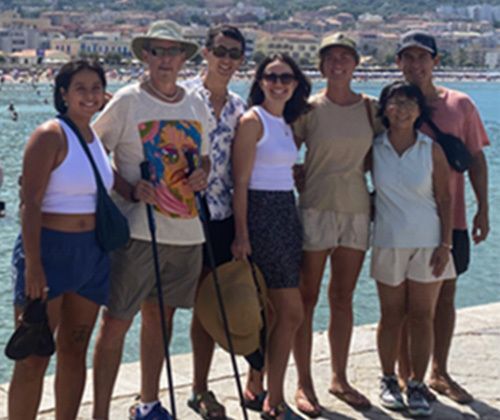
My father, John, was the second eldest of four siblings. He had one older brother who also had Kennedy’s as well as a younger sister and brother – both of whom, as far as I am aware, tested negative for Kennedy’s.
There you have it — my family’s Kennedy’s story.
A Note of Thanks (Now it’s time to be a bit mushy!)
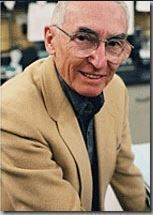
This thank-you has been a very long time coming, but my family will be forever grateful to the MND Society in Melbourne (now MND Victoria), who helped us navigate the maze to find the truth, and to Professor Zajac and his research team at the University of Melbourne.
We’d especially like to give an extra special call-out to the late Brenda Ryan from the society, who was so caring, understanding, and supportive during that time. I was deeply saddened to learn that Brenda passed away in 2016. Vale, Brenda!
By recounting our story, I hope fewer families will be left in the dark.
Not Sure About a Diagnosis? (trust your gut and keep pushing…)
Keep asking questions. If you suspect you, a loved one, or someone close to you may have Kennedy’s or an MND condition, or if you aren’t convinced by a diagnosis you’ve been given, please don’t go it alone. Advocate for yourself or your family member or close friends and ask your doctor about genetic testing.