
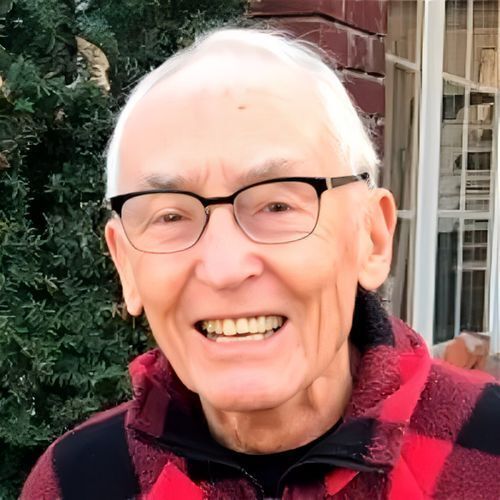
Dr. William Robert Kennedy (1927-2026)
It is with deep sadness that the Kennedy’s Disease Association (KDA) shares the passing of Dr. William Robert Kennedy, a Neurologist and Scientist whose work gave the KDA community clarity, recognition, and hope. Dr. Kennedy passed away peacefully at the age of 98, leaving behind a legacy that will continue to shape the lives of individuals and families affected by Kennedy’s Disease (KD) for generations to come.
As a young neurologist at the University of Minnesota Medical School, Dr. Kennedy was the first to identify and describe “progressive proximal spinal and bulbar muscular atrophy of late onset” in an article later identified among the 15 most influential papers published in the journal Neurology's first 50 years. At a time when many patients were misdiagnosed with ALS, his discovery provided something profoundly meaningful: an accurate diagnosis and a more hopeful path forward. The condition would became known as Kennedy’s Disease, forever linking his name to the community he helped bring into focus.
Over a remarkable 57-year career at the University of Minnesota, Dr. Kennedy remained deeply committed to research, mentorship, and patient-centered science. He led the Kennedy Neuromuscular Lab, where his team pioneered tissue staining techniques that advanced the understanding of neuromuscular disease. His work spanned many areas of neurology and medicine, including:
- The first isolation of a single muscle spindle
- Methods to quantify sweat gland production
- Demonstrating that islet cell transplantation could halt and reverse nerve damage
- Inventing a device to precisely measure the presence and progression of peripheral neuropathy
Dr. Kennedy was one of the University’s top medical grant recipients, maintaining active research funding even after retiring at age 92. His career was marked by extraordinary recognition from his peers, including multiple lifetime achievement awards, election as president of a professional association, designation as a “Giant of Neurology,” and special honors from the American Medical Association. He published 21 book chapters and 143 peer-reviewed articles, and for 25 years represented neurology at the AMA, serving three terms on its Council of Scientific Affairs.
Beyond the lab, Dr. Kennedy lived with joy and curiosity – playing tennis into his 90s, downhill skiing competitively into his 70s, canoeing the Boundary Waters with family and colleagues, sailing, and piloting his own airplane. Those who knew him best describe his greatest legacy as the example he set: one of humility, kindness, gratitude, and dedication to others.
For the Kennedy’s Disease community, Dr. Kennedy’s impact is immeasurable. His work did more than define a condition – it gave patients a name, a diagnosis, and a community with hope.
We extend our deepest condolences to the Kennedy family, and honor Dr. Kennedy through our continued commitment to the KDA community he helped bring together.
To learn more about Dr. Kennedy’s life and his remarkable journey, please read:
- Dr. Kennedy’s obituary, published by the Minnesota Star Tribune: William Robert Kennedy Obituary (1927 - 2026).
- A Visit With Dr. William Kennedy, by Terry Thompson, President, Kennedy’s Disease Association.
Honoring Dr. Kennedy’s Legacy
In accordance with the family’s wishes, donations may be made to the Kennedy’s Disease Association in Dr. Kennedy’s memory. If you choose to give, please be sure to select “In Memory of Dr. William R. Kennedy”.
Donate to the Kennedy’s Disease Association
The Kennedy’s Disease Association is deeply grateful for Dr. Kennedy’s life, his work, and the hope he gave the KDA community. His legacy lives on through every person diagnosed, every family supported, and every step forward in research to find a cure for Kennedy’s Disease.